Who Shapes Historical Fiction?
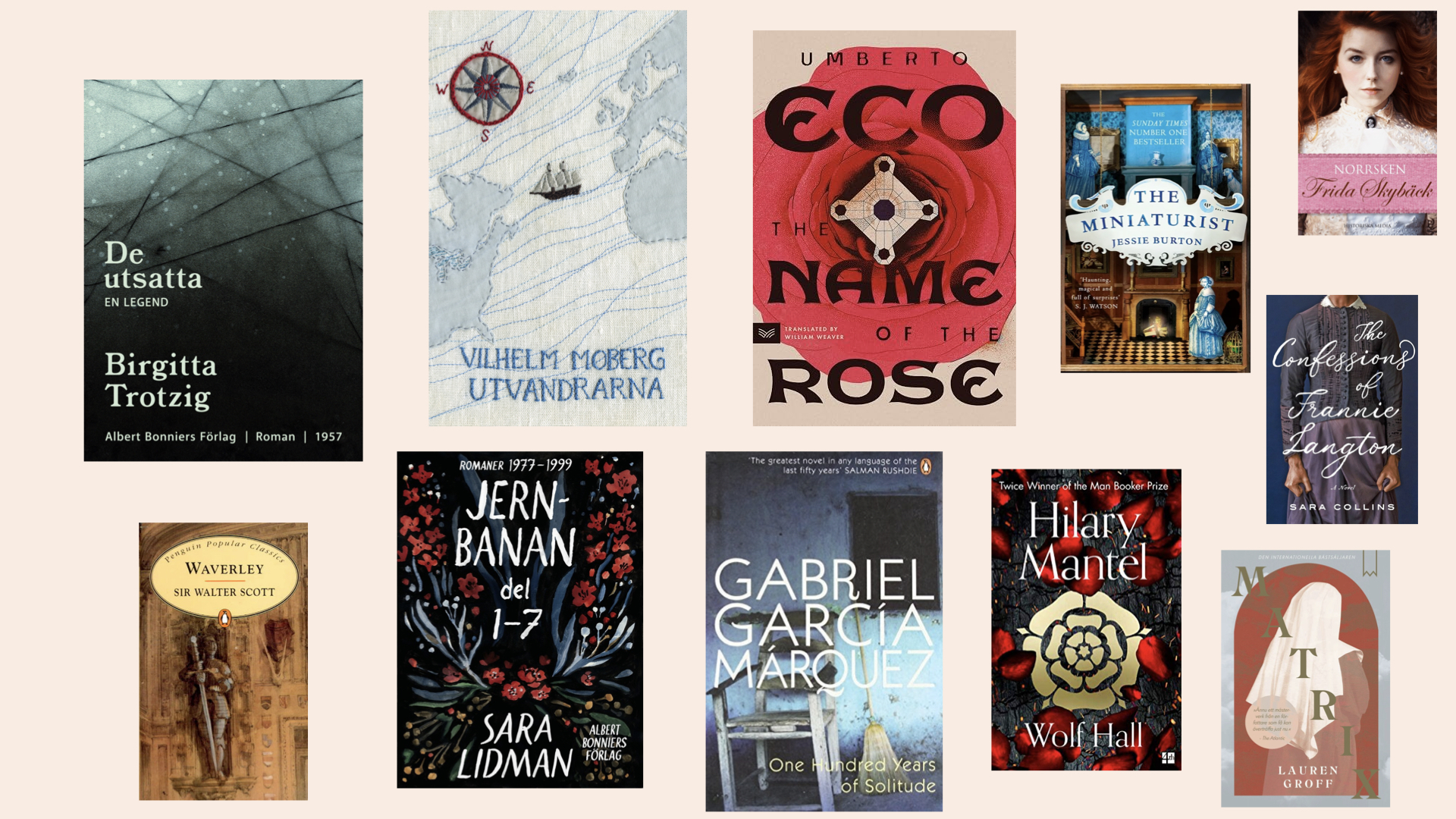
I think of historical fiction as the public face of history. Though this face may at times be distorted or partial, it’s often what gives people outside the discipline a sense of what the past might have looked, sounded and felt like. As a historian, I believe we have a responsibility to engage with these depictions, whether we agree with them or not. When I taught undergraduates in Scotland, I sometimes found that students’ ideas about Scottish history came not from history books, but from reading Diana Gabaldon’s Outlander or watching its television adaptation. I recognised in Outlander traces of an older Scottish historiography, particularly in its portrayal of the hyper-masculine, ”wild” Highlander whose primary place, in nineteenth-century accounts, was in the British army, contributing to its violence capital. I could only make that connection by engaging with traditional historiography, emerging scholarship deconstructing older portrayals of national identity, and historical fiction itself.
This is why I want to be part of the conversations in which historical fiction is produced and shaped. Rather than being a passive reader who simply appreciates that someone wants to write fiction based on history, I want to engage actively as a historian – not to endorse or condemn such representations of the past, but to be part of the conversation that forms them.
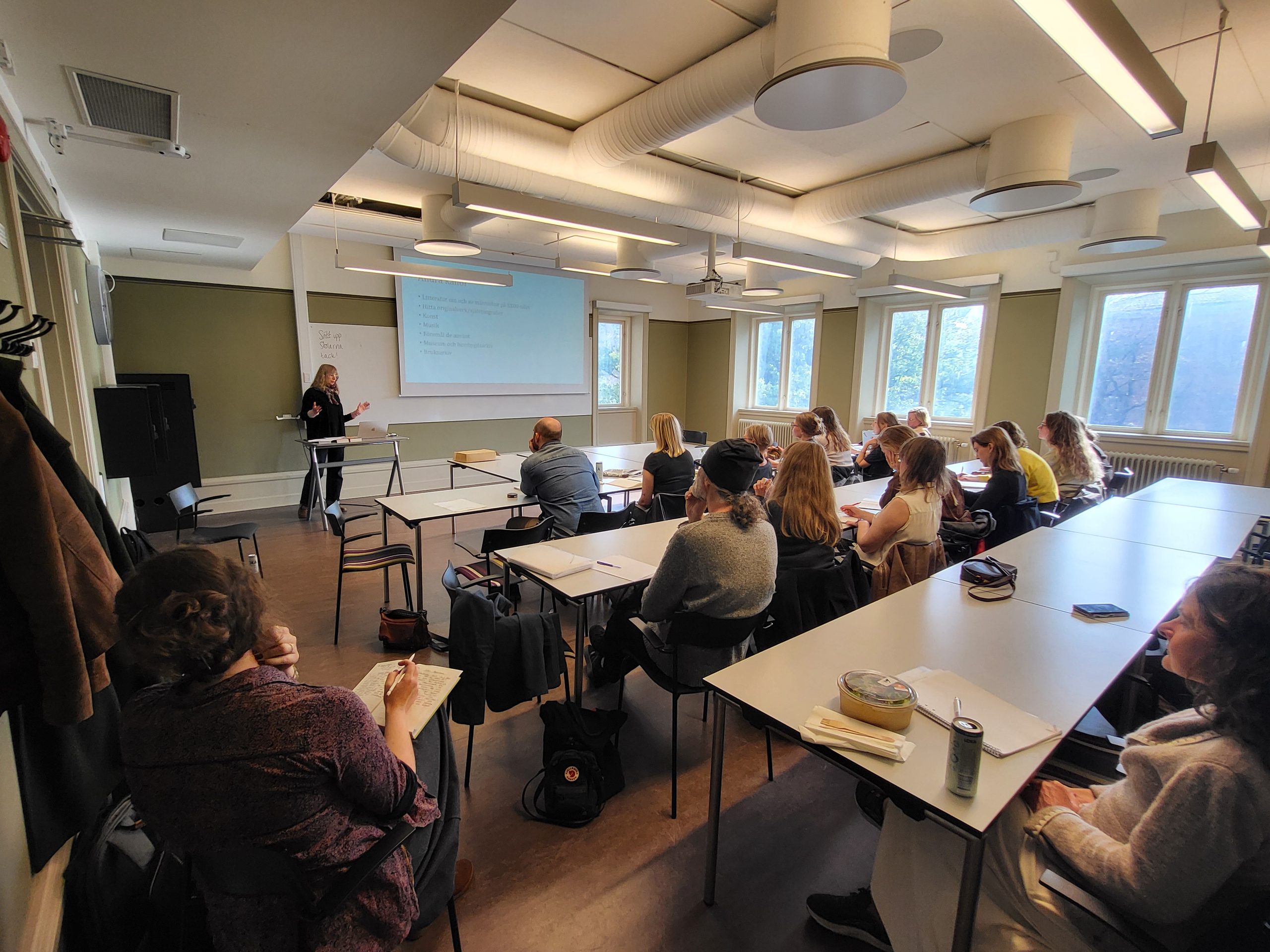
For this reason, I wanted to create a forum where writers, historians, and publishers could come together to discuss the purpose and future of historical fiction, at a time when it’s comparatively invisible in literary and historical discussions. This led me to initiate a collaboration between the Department of History and the Writing School (Författarskolan) at Lund University, which took place on 5 October 2026. Speaking with writing students during the event, I was struck by how many were already interested in incorporating history into their work. This raised practical questions: are emerging Swedish writers getting the support they need to locate and interpret historical sources that might inspire their fiction? What responsibility, if any, do historians have to make themselves available to creative practitioners interested in the past? Collaborations between historians and writers surely do not have to begin and end with writers paying historians to fact-check their work?
How we portray the past: An interdisciplinary discussion
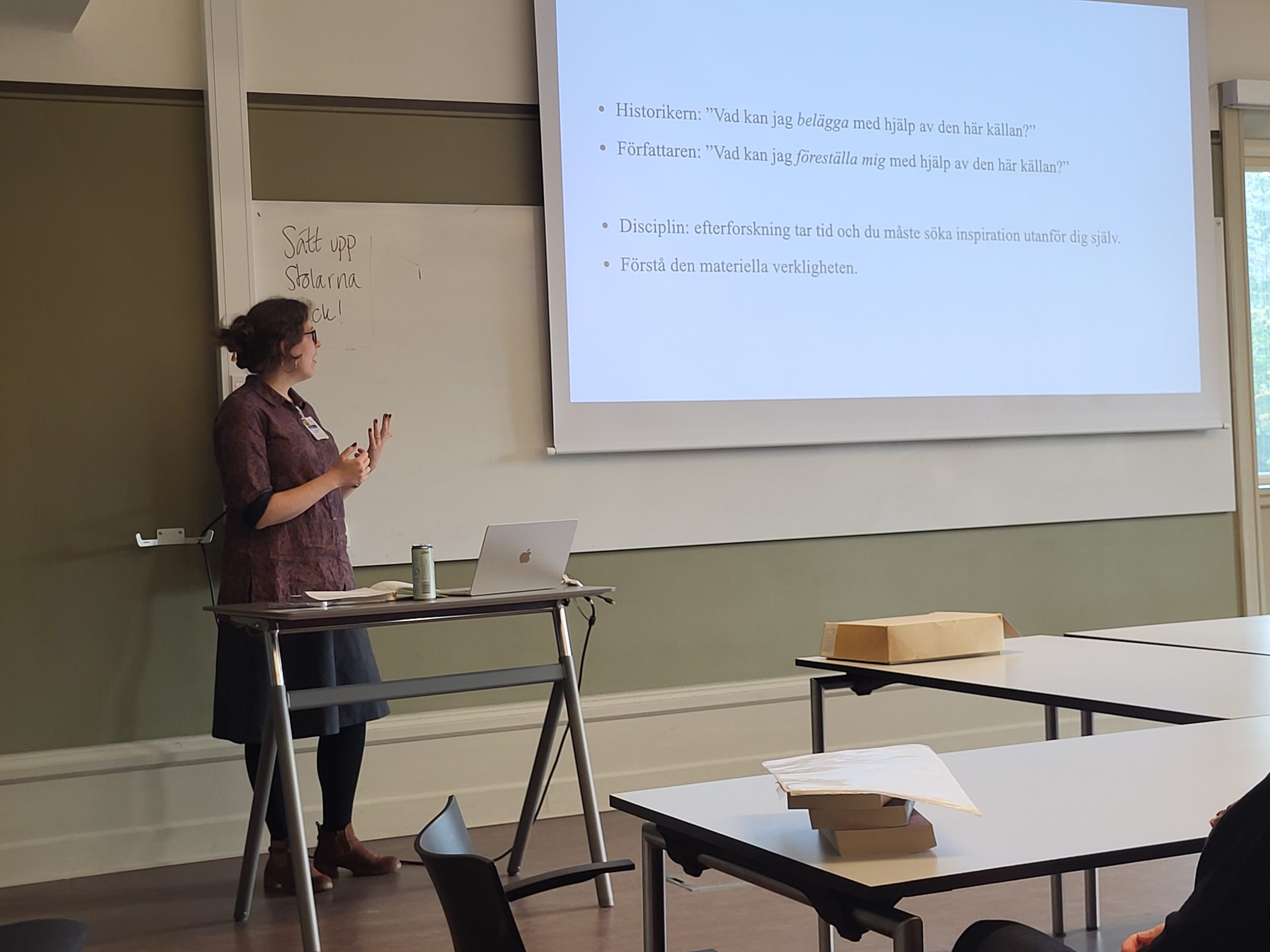
The day began with a lecture by Thomas Sjösvärd (Mälardalen University) on the history of the historical novel, tracing the distinction between fact and fiction back to depictions of the Trojan War, as well as engaging with Shakespeare’s use of history, the importance of Walter Scott’s writing in placing history at the forefront of his novels, and the impact of historical novels on Swedish working-class literature. Next, historical novelist Ida Andersen spoke about the process of writing her trilogy about the Kosta Glassworks in eighteenth-century Småland. Andersen stressed the importance of a rigorous research process (travelling to places of importance for the story; using one’s senses; studying a variety of sources to immerse oneself in a specific time period). In the final lecture, I explored the value of probate inventories as a source of inspiration for writers, as well as ways of integrating history more broadly into the creative writing process. As noted previously on this blog, probate inventories are intimate documents that give us access to the material world not just of elite actors, but also of other levels of society that died with a debt or something else worth listing. In Sweden, probate inventories were recorded on a large scale from the eighteenth century onwards, and remain one of the best sources to explore the material lives, family relationships, and everyday experiences of people in the past.
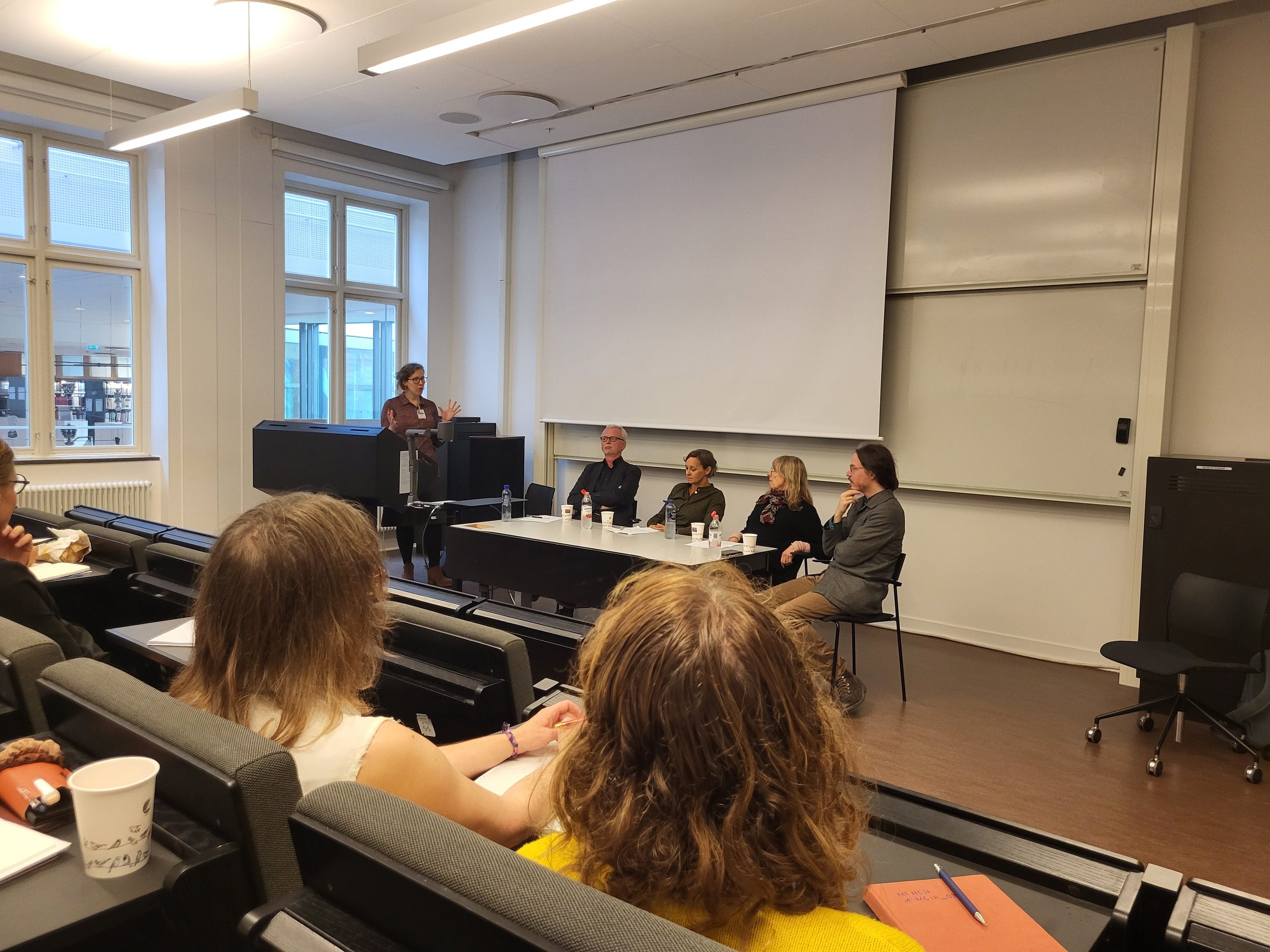
The day finished with a panel discussion featuring Ida, Thomas, Dick Harrison (professor of history and historical novelist) and Klara Rasmussen (editor at Historiska Media Förlag). Approaching the topic from the perspectives of a writer, a literary critic, a historian, and a publishing specialist allowed us to broaden the discussion. We considered whether contemporary autofiction has pushed historical fiction to the margins of literary debate (as Sjösvärd pointed out, early novels often dealt with periods preceding their authors’ lifetimes, unlike many novels today); whether fiction can communicate certain “truths” that historical scholarship cannot; and what themes and experiences the panellists hope to see explored in the historical novels of tomorrow.
As with any good discussion, the aim was not to reach a consensus, but to show that the questions surrounding this topic are diverse, open-ended, and alive. For me, the theme day reinforced the importance of historians taking an active part in conversations about how the past is imagined in fiction. Historical fiction is not simply a way of telling entertaining stories about the past, but is one of the ways in which the public comes to understand it.
Images by Martin Dackling.