A majority of probate inventories are made up of movables, which in turn are sub-divided into more precise categories. The lucky researcher will come across the variable miscellaneous section (“Diverse”), which was a list of movables that fit within no other category in the probate.
In the minister Mårten Gustaf Sjögren’s probate, the first item on the list of “diverse items” is an electricity machine. The probate notes that the machine is broken (“söndrig”), and goes on to list things like boxes and old beehives. The machine was clearly not treated as a prized possession, perhaps because it was too broken to be fixed.
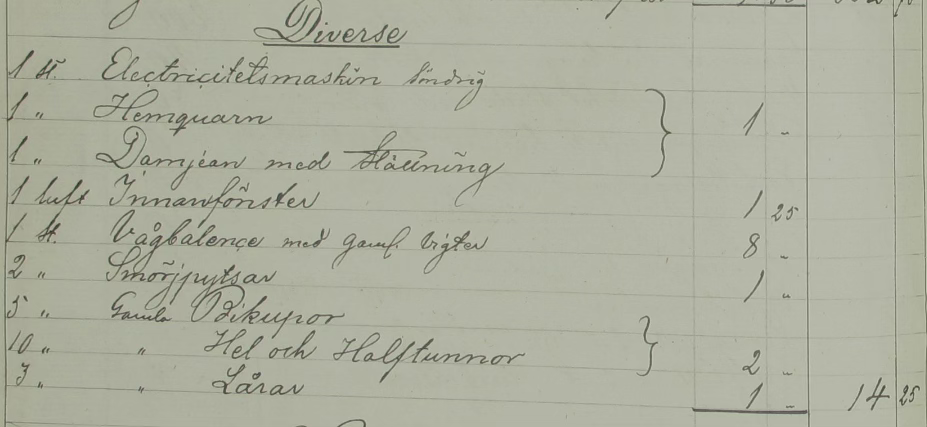
“1 Electricitetsmaskin söndrig”. Detail from Mårten Gustaf Sjögren’s 1869 probate.
The currency is riksmynt.
Sjögren died in the late 1860s, which makes it particularly interesting that he was in possession of an electricity machine. The vague labelling makes one wonder whether those setting up the probate were unsure of what it was, or whether it was known as such at the time.
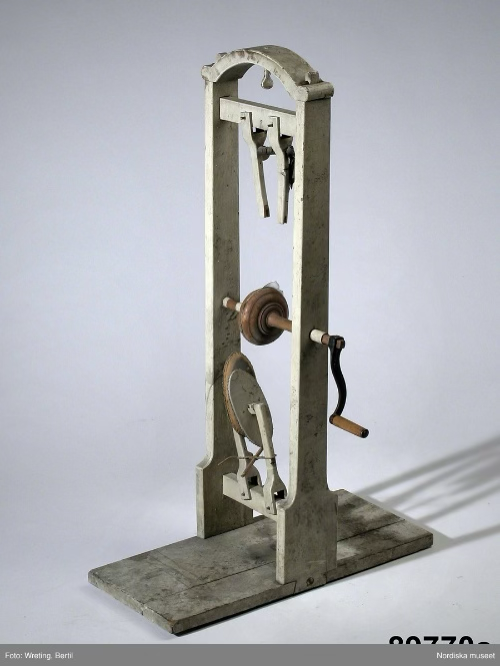
To what use might the electricity machine have been put? Perhaps Sjögren was struggling with illness and used the machine as a cure. Since the middle of the 1700s, the use of “medical electricity” had been thought to cure a variety of nerve diseases.
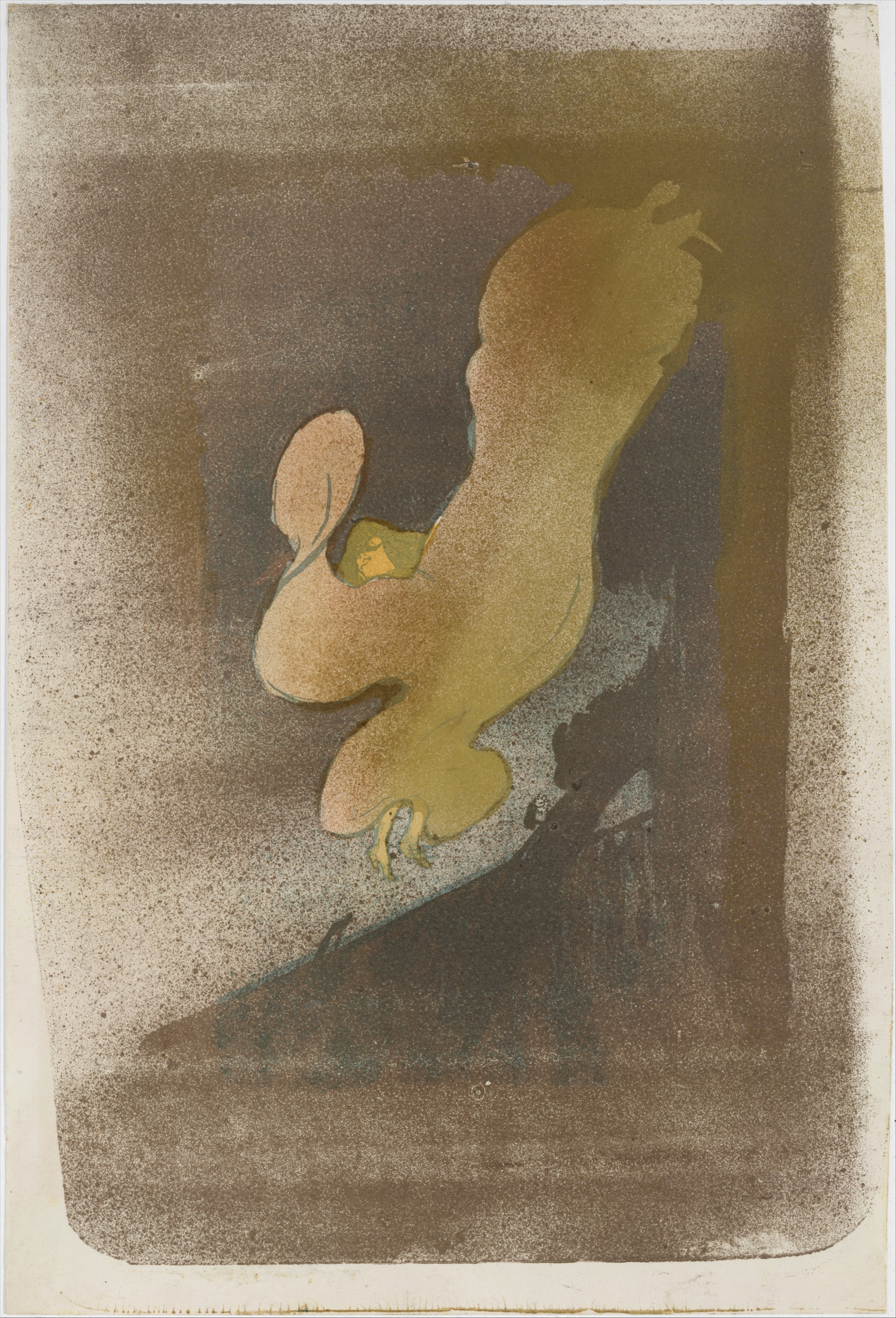
Perhaps Sjögren’s imagination had been caught by the literature of his time. Electricity was ripe with imaginative possibility in the 19th century. The most famous example being Mary Shelley’s Frankenstein, the scientific and artistic potential of electricity was moving like shockwaves through the contemporary cultural scene. Nowhere was this more evident than in the art of Loïe Fuller, a dancer and one of the first ever performance artists, also known as the Electric Fairy. Fuller enlightened her dance performances with electric lights to awe her audience. From its potential to enhance entertainment to curing illness and – as in Shelley’s novel – create new life, electricity was omnipresent in Sjögren’s time.
One thing is certain, however – if Sjögren was hoping to bring a Frankenstein-like being into existence with his electricity machine, no such creature is listed in his probate.