Funded by the Swedish Research Council (Vetenskapsrådet)
Project period: 2027-2029
Project team: Marcus Falk
Buying on (informal) credit analyses the everyday practices of the early modern credit economy by using 18th century Sweden as the case study. It is well known among historians looking at the market economy of the era that the early modern period to a large extent was a credit economy, with most of Europe suffering from a chronic lack of ready cash in circulation. This necessitated most transactions to be done in credit rather than cash, even for relatively low values as low-denomination cash often was in particularly short supply. However, we know very little about the actual, everyday practices of this credit economy; how households, on a practical level, engaged with credit both as lenders and as creditors, what forms it took, and the circumstances around repayment.
In order to get to the bottom of these practices the project will be utilizing petitions submitted by the common people to the county governors during the 18th century. Petitions, formal requests addressed to some sort of official, was one of the main ways which common people of the period could interact with and attempt to leverage state power. While petitions can concern basically any part of daily life, a substantial part of them are requests for the county governor to intervene in cases concerning credit. By analysing these cases we can identify the daily practices and institutional constraints of everyday credit, and finally get to the bottom of how this economy, on a very practical and everyday level, actually functioned.
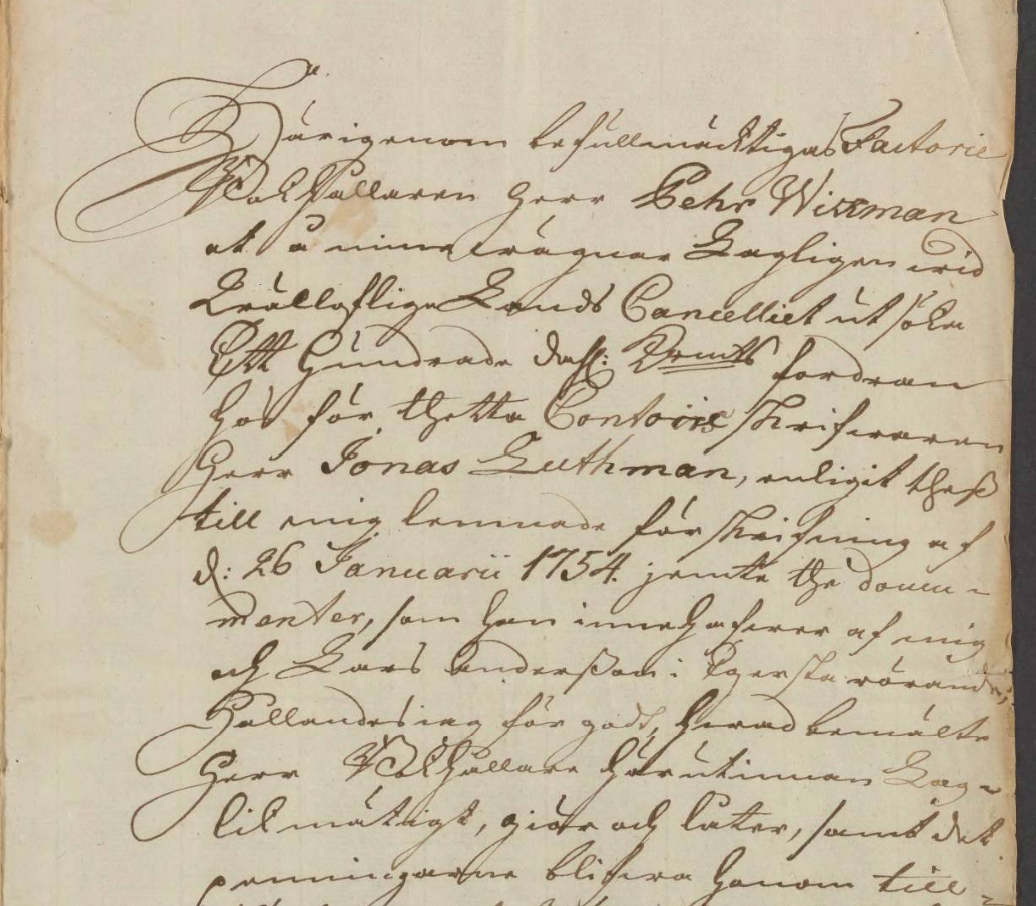
Power of attorney for accountant Pehr Wittman to collect a debt of 100 daler coppercoins from office clerk Jonas Luthman, on behalf of famer Olof Olofsson in Karlskoga parish, dated March 26 1756
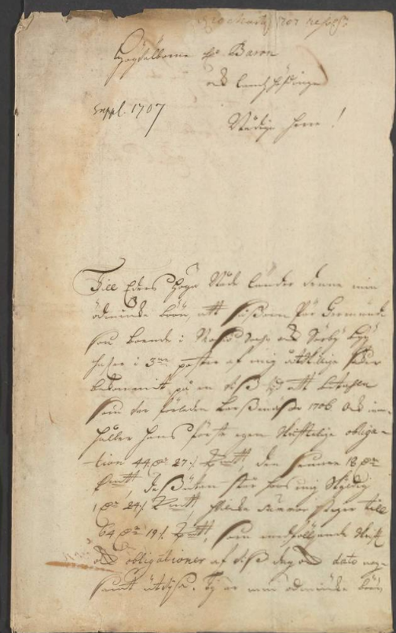
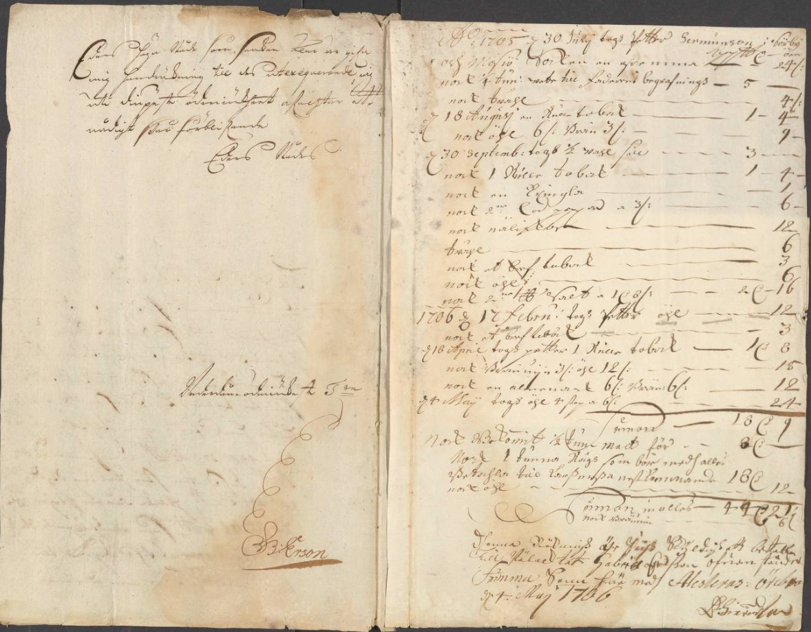
Petition from merchant Gabriel Ersson in Örebro to request aid in collecting his outstanding claim on Per Germundsson in Mosjö Parish for his several purchases of (mostly) beer and tobacco during 1705 and 1706. Dated february 2 1707.