Working with probate inventories is to work primarily with numbers and objects. However, it is also a historical source that tell us much about personal names; it allows us to see trends and trend breaks in how people chose to name their children, what lineages parents wanted to stress, and – sometimes – how invention and creativity characterised 19th century naming practices. Some families were inspired by Greek mythology when they named their children. As one of the three charities in Greek mythology, Eufrosyne (alt. Euphrosyne) is the goddess of cheerfulness. This is an unusually common find in the sources, particularly as a middle name for girls from wealthy families. Others chose Latin names like Octavia.
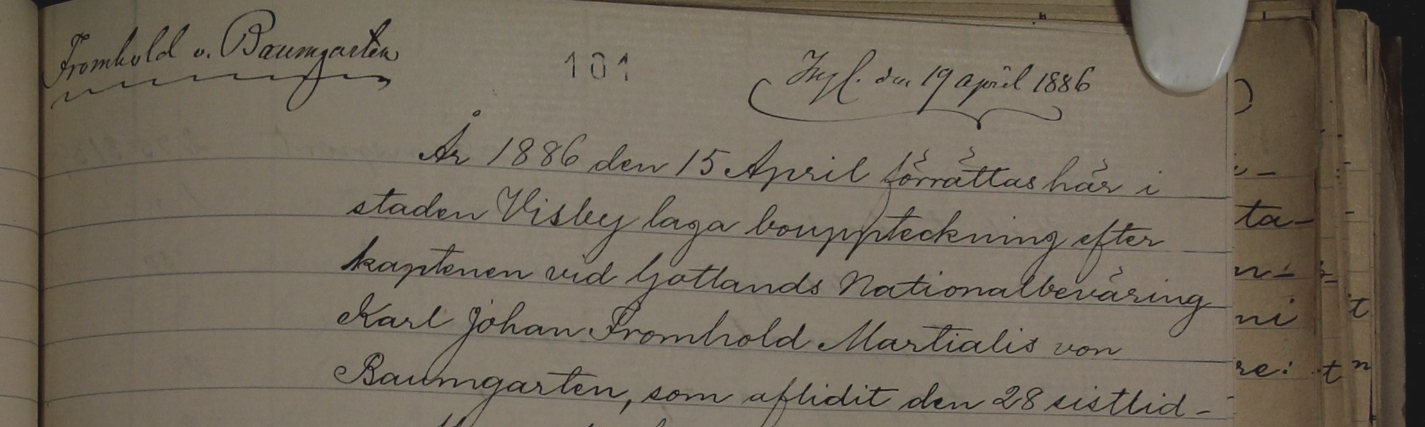
Some families used female versions of better-known male names to commemorate a father or grandfather, some rare examples being Nilsalie or Nilsine, Aaronie, and Reinholdina. This is one way of mixing tradition with invention, of leaving an individual mark within the sometimes stiff domain of family tradition.
In the spirit of discovery, we have gathered some of the common, or not so common, 19th century names that we have come across in the probate inventories that we work with. Perhaps it’s time to bring some of them back?
- Amatus m
- Akates m
- Bernhardina f
- Camillus m
- Casimir m
- Corfitz m
- Dedekind m
- Eufrosyne f
- Fromhold m
- Gillis m
- Gumelia f
- Gustava f
- Heliodora f
- Hedera f
- Idalia f
- Jacobina f
- Jaquette f
- Laurentia f
- Lotharius m
- Numa m
- Octavia (Viva) f
- Oscara (Cara) f
- Ottiliana f
- Ricardis f
- Rikissa (Rixa) f
- Selim m
- Silerius m
- Snöfrid f
- Thomasine f
- Wilhelmina (Mina, Minette) f
In history as much as today, names are both intimate and public, indicative of personal identity as well as of family belonging. They can also suggest connections between people and places that we, in hindsight, may not expect. While 19th century parents’ choice of old Greek and Roman names may be intended to show off classical learning, one Swedish family’s decision to name their eldest son Libert in the time of the American Revolution may suggest an affiliation with the concept of liberty. The relative popularity of the name Selim at the turn of the last century may also surprise some, given that its Arabic roots might have made it relatively unknown in Sweden.
Studying names, we see just how complex the associations and connections of historical people can be. After all, how better to leave a mark than in your choice of names for the next generation?