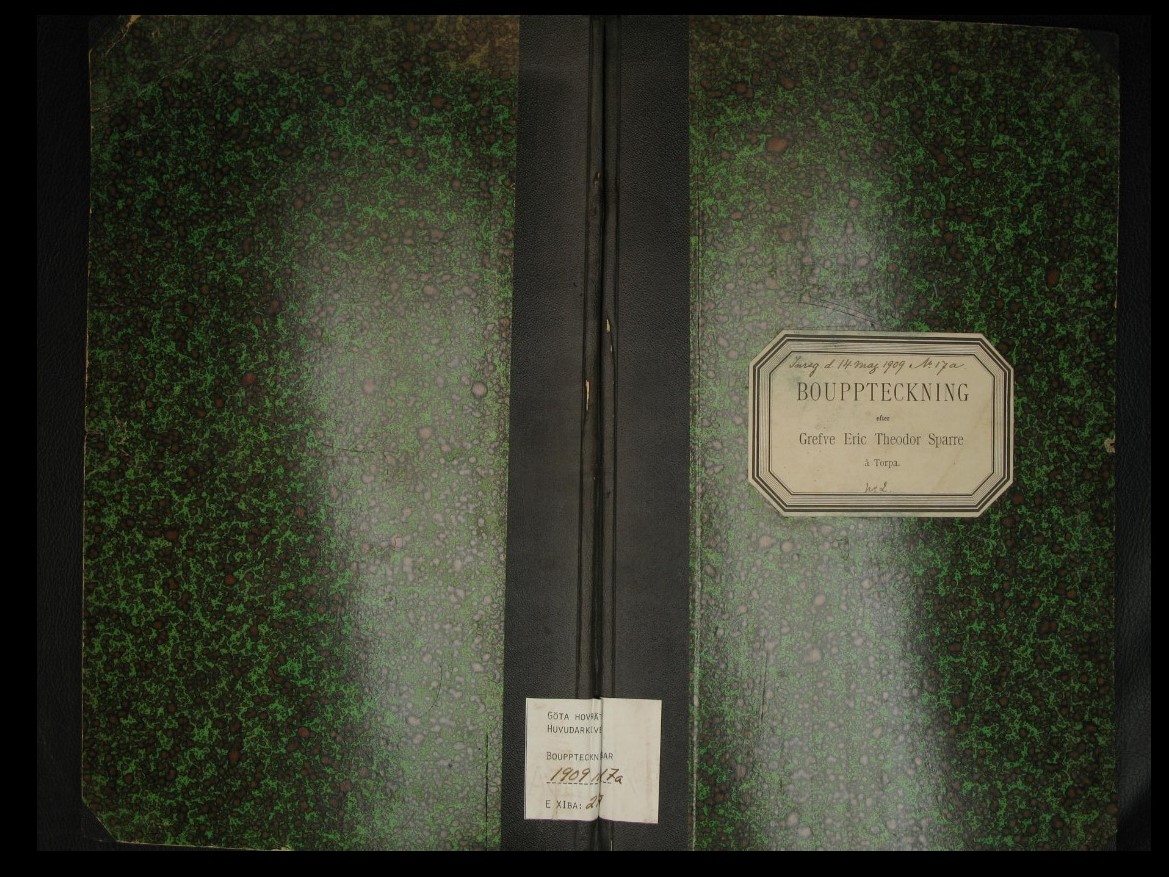
If you died in Sweden after 1734, someone would have to write down everything you owned: your furniture, your debts, your bank balance, even your books. Here’s what these lists can tell us.
The detective’s ledger: what probate inventories tell us about ordinary lives
Imagine you die today. Then, imagine a stranger, three months from now, walking through your home with a notebook: counting your chairs, asking your family what you owed the neighbour, writing down your bank balance. Then filing it all away, where it sits for two hundred years until a historian stumbles across it.
This is not a thought experiment. It is, more or less, what happened to a large part of those who died in Sweden with debts, or anything worth listing, from the eighteenth century onwards. The document they left behind is called a probate inventory (in Swedish, bouppteckning), and it is one of the richest and most oddly intimate sources historians have for reconstructing the past. While available across Europe and even beyond it – part of the US, for instance – the Swedish bouppteckningar are extremely rich in detail, making them precious windows on the past.
How a law written to safeguard creditors became a gift for historians
Sweden’s Civil Code of 1734 made it compulsory to draw up an inventory for every deceased person within three months of their death. The reasoning was practical: heirs could be held personally liable for a dead person’s debts if they had already helped themselves to the inheritance first. The law existed to protect creditors, not to satisfy future historians.
And yet, that is exactly what it ends up doing. Because the inventory had to be thorough, it recorded not just money and property, but promissory notes, bank deposits, outstanding loans, furniture, livestock, tools, and, in some households, the contents of a personal library, book by book. Read one of these documents today, and you are essentially looking over a stranger’s shoulder at the precise moment their life stopped and their possessions had to be accounted for.
Here is the part that often surprises people outside Sweden: this is not just a historical curiosity. The requirement never went away, and a copy of every probate inventory ever filed, for anyone who has died in Sweden, is still held today by Skatteverket, the Swedish Tax Agency.
Looking at past wealth…and lives
Take Johanna Helena Andersson, a spinster who died in Uppsala in 1910 at the age of 74. Her inventory lists 47 separate credit transactions: she had lent more than 14,500 kronor to fifteen people, while holding deposits worth over 42,000 kronor across five different banks. She was, in short, a careful financial operator, spreading her savings the way a modern investor might, and her inventory is the only reason we know it.
Or take Johanna Carolina Åkesson, a widow who died in Gävle that same year, leaving a very large fortune worth nearly 900,000 kronor. Her husband had died seventeen years earlier with a far more modest wealth. Comparing the two documents side by side, historians can watch the family business grow, its investments shift towards stocks, in the years after the “man of the house” was no longer around to run it. The widow’s ledger tells a story her husband’s never could.
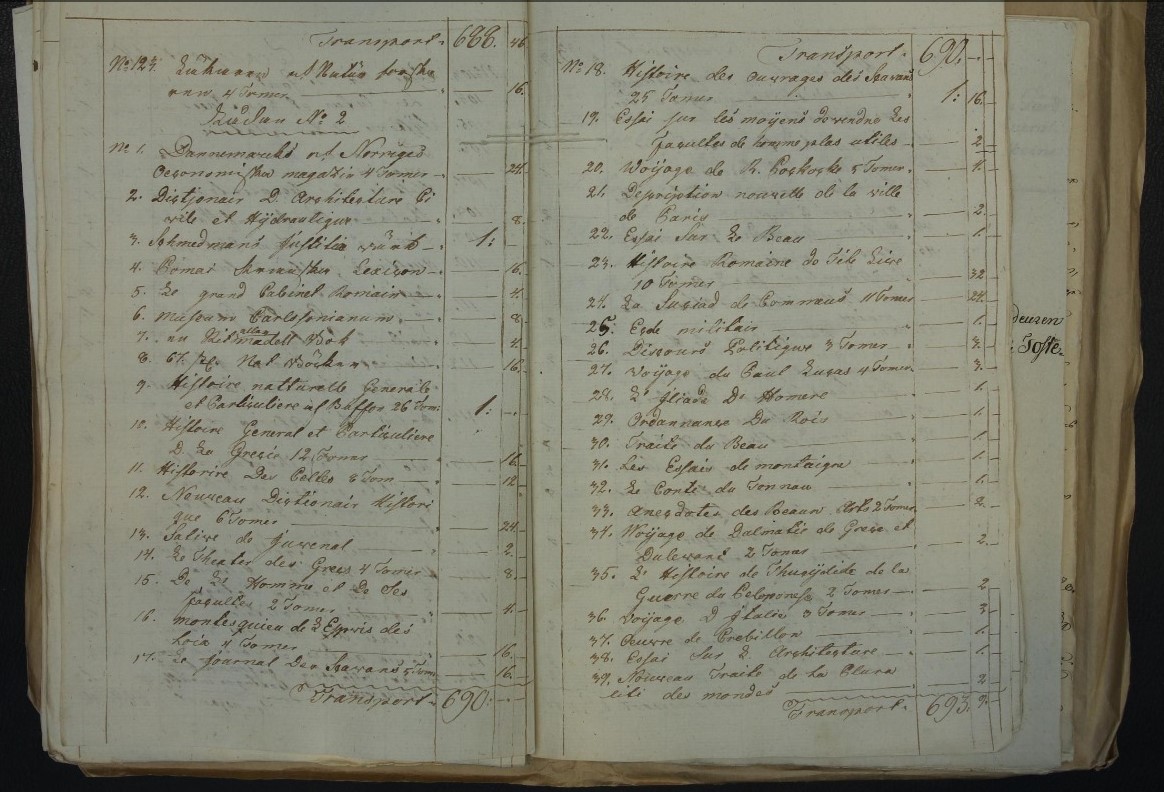
Sometimes the scribe went further still, cataloguing the deceased’s entire library, title by title. This is where probate inventories stop being financial records and start being something closer to a mind on paper. Consider Carl August Ehrensvärd, the Swedish naval officer, architect and writer, whose inventory was drawn up in 1801. His library ran to over 460 volumes, in French, Latin and Swedish, including the complete works of the Swiss philosopher Charles Bonnet, a treatise on hydraulic architecture, an Italian book on architecture, and, in Latin, Ovid’s Metamorphoses, Virgil, and Homer’s Iliad. What did a wealthy, educated Swede read in the late eighteenth century? Ehrensvärd’s shelves answer that more precisely than any general history of “Enlightenment reading habits” ever could.
It would be a mistake, though, to treat probate inventories as a perfect mirror of the past. Only around 40 to 50 per cent of people who died actually left one, and the wealthy are heavily overrepresented: merchants and professors appear far more often than their real share of the population would suggest, while artisans, servants and the poor are consistently underrepresented. Women present a particular puzzle too. A married woman’s belongings were usually folded into her husband’s inventory, so her individual finances are often invisible until she becomes a widow, at which point, suddenly, we can see her clearly for the first time.
So a probate inventory is less a snapshot of “how everyone lived” than a series of detailed windows scattered unevenly across the past, opening more often onto the lives of the wealthy, the settled, and the outlived.
Why it still matters
There is something quietly moving about these documents. Behind the legal formulas and lists of kronor and chairs sit real decisions: a woman spreading her savings across five banks, a family reorganising its finances after the death of its head, a spinster’s private wealth surfacing in an official record for the first time.
Historians have called working with these sources “a complicated puzzle”, and that is exactly right. You rarely get the whole picture. But piece enough of them together, and you start to see something no textbook can give you: what it meant to own things, owe things, and leave things behind, across Sweden, more than a century ago. And somewhere in an archive at Skatteverket, the same puzzle is quietly being assembled for the twenty-first century too.
Top picture: cover of the probate inventory of Erik Teodor Sparre (Göta Hovrätt – Adelns bouppteckningar EXIBA:272 (1909) Bild: 1)
Second picture: detail from the probate inventory of Carl August Ehrensvärd (Svea Hovrätt – Adelns bouppteckningar EIXb:163 (1801) Bild 20 / Sida 34)